

Follow through and let the model fly
By Jacob and William Ramsey
As seen in the Winter 2009 Park Pilot
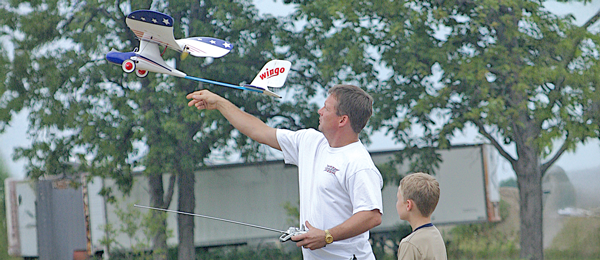
Tiny wheels and tall grass can often make takeoff with a park flyer model impossible, and landing, well that’s just a mess of trouble. The wheels stick instead of roll after touchdown. Should tall grass and small wheels meet, a good hand launch is better.
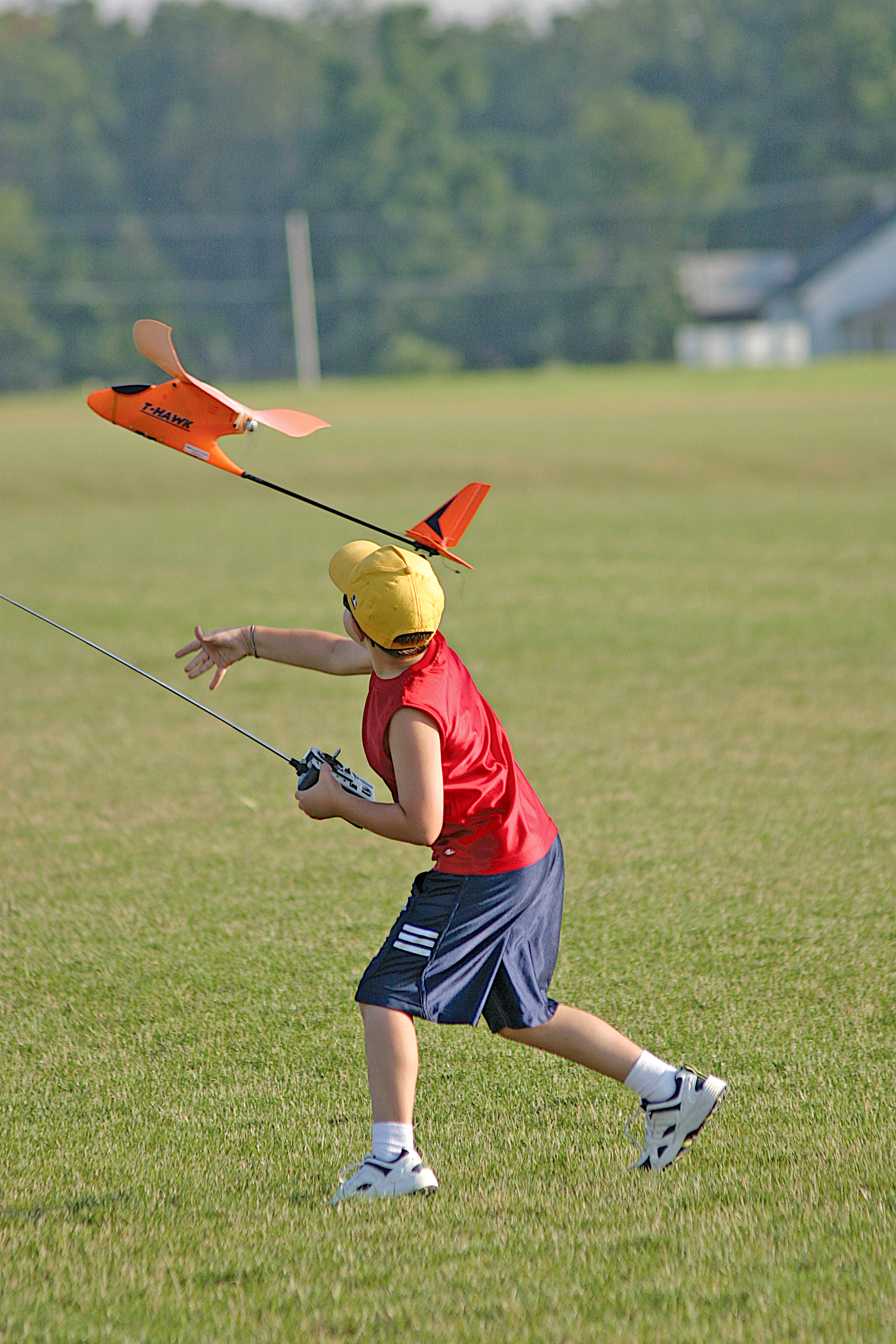
You shouldn’t hand-launch every model the same way. High-wing models are usually easy to grip under the wing. Low-wing models and foamies can usually go with an underhand toss, and although that isn’t the easiest move for a high-speed model, most park flyers don’t need a lot of speed to get airborne.
High or low wing, a hand launch works best when the model balances level in your hand. A straight-and-level launch is one of the most important points. If the model wants to tip forward or back in your hand, it will be a lot harder to throw straight.
There isn’t any park flyer we’ve tried that can’t be hand launched. To test how easy the launch might go, we hold the model securely and throttle up to see how much power it has. If the model wants to pull out of our hands, it will only need a light, straight toss into the wind. If the airplane has less power, we throttle up and run into the wind with the model held high. If the model feels like it wants to fly, a fast throw into the wind will get it flying. You can also run and launch, which is typically how we get our jets airborne.
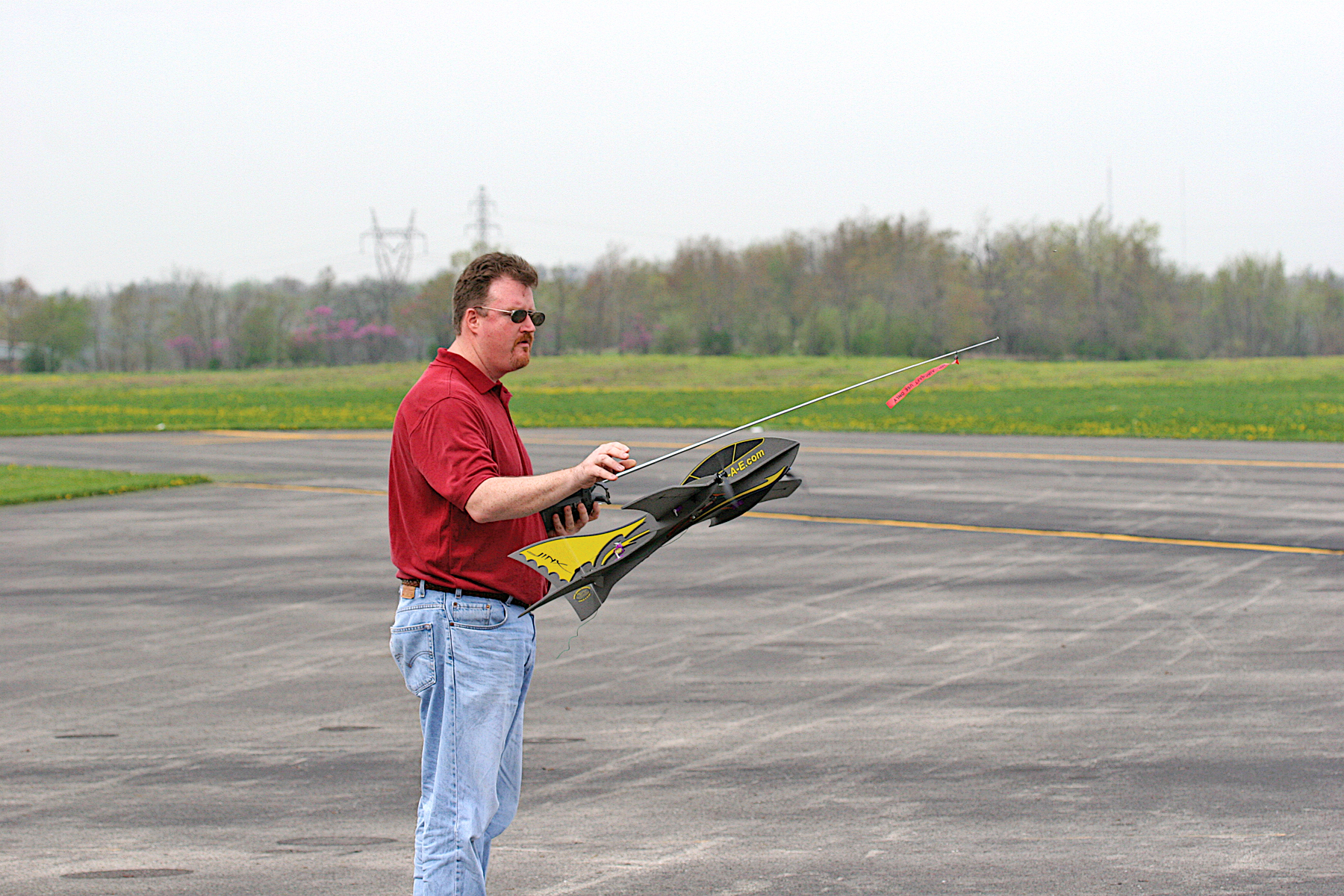
Adequately powered, low-wing models can typically be launched with a smooth underhand motion.
The model’s controls—and trims—should always be double-checked before launching. Make sure that everything is neutral and that the controls move in the correct direction. You can hand-launch by yourself or have another person do it, but it’s usually best for the pilot to have both hands on the controls at all times.
Our maiden flights always have the elevator set with three to five clicks of up-trim. Don’t be afraid to fly on windy days because the headwind actually makes it easier to launch.
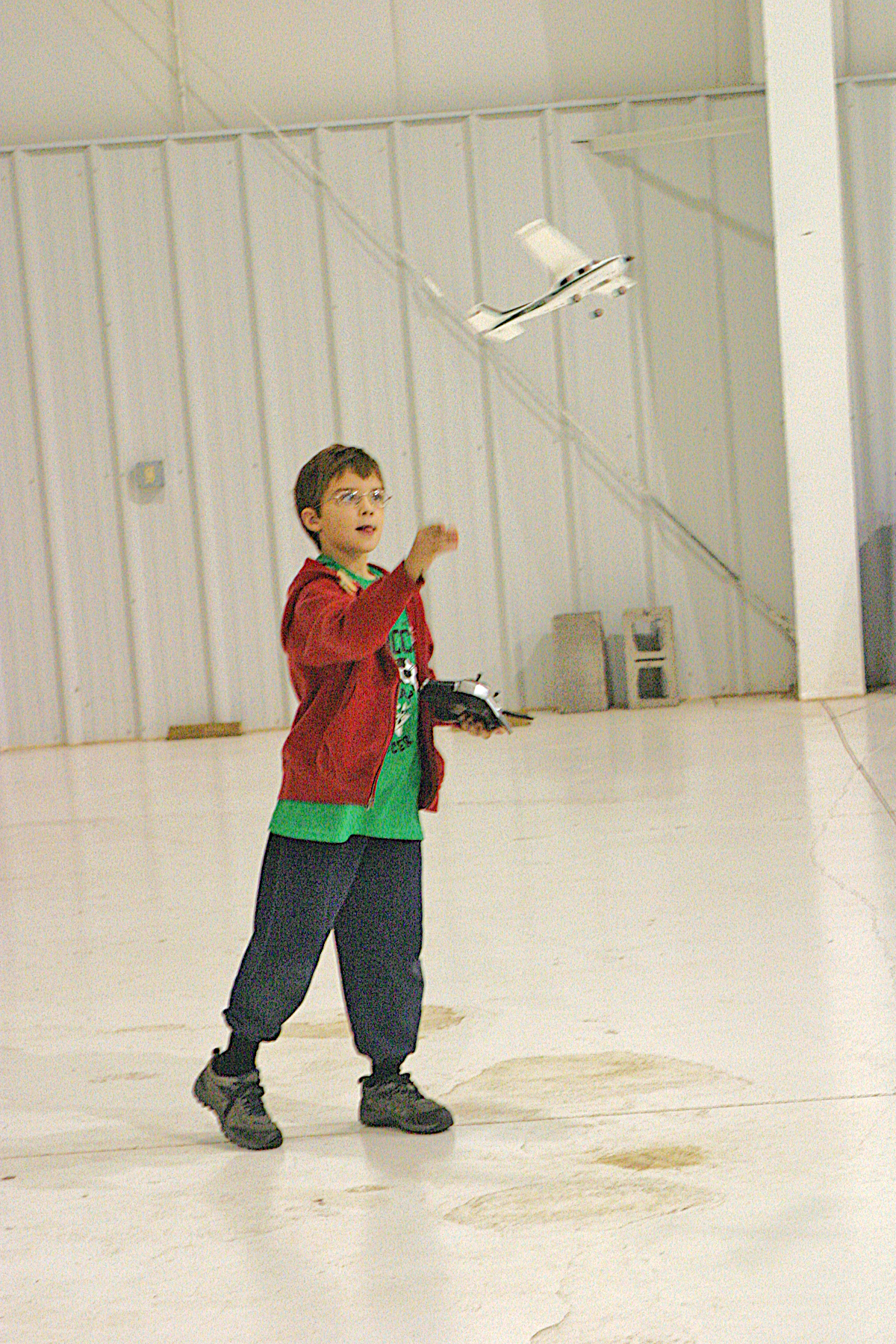
Lightweight models need no more than a forward toss.
The overhand launch is the easiest. Make sure your feet are firmly planted and hold the model firmly as high and away from your head as possible, although it doesn’t have to be behind your shoulders. Advance the throttle to full and smoothly launch the model into the wind. Your arm rotates in a circular motion as you throw the model straight. Make sure you hold and release with the wings level. You want your hand to stop at the end of the launch, pointing where you want the airplane to go.
Let go too early and the model can pitch up and stall before your hand can reach the elevator control. Launch too late and the only thing in front of the model is not what you want: ground. Always throw a little harder than you think the model needs; it’s the safe bet.
Once released, resist sudden control inputs until the airplane reaches maneuvering speed. Keep the wings level and the model pointed into the wind, and then climb.
Most flat foamies and other park models have enough power to fly straight up. We can launch them with an underhand flip. If the landing gear is removable, remove it. It reduces weight, and the model will look like it has retracts.
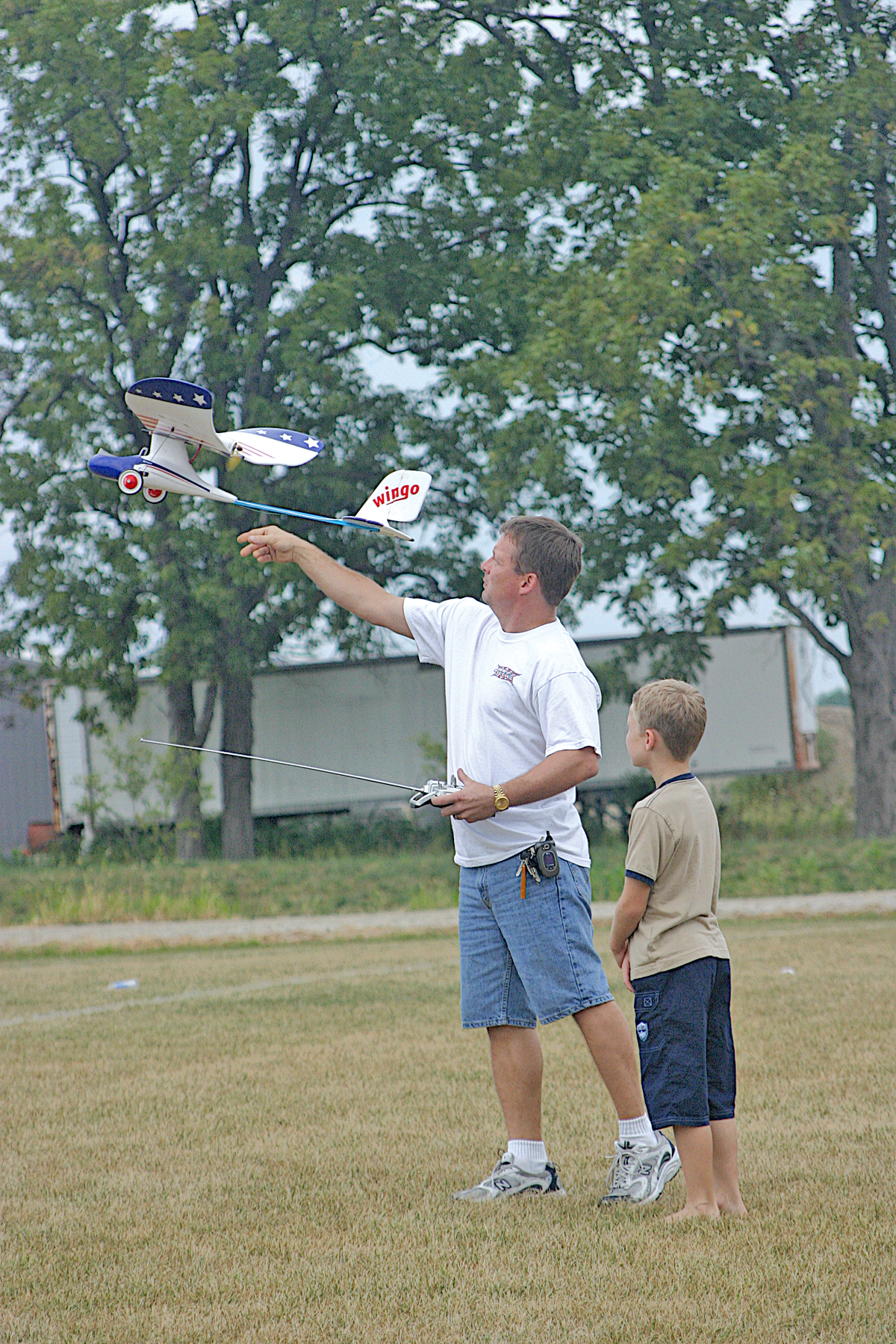
In this hand launch, notice how the hand finishes in the direction that the pilot wants the model to go.
Jacob’s Toss Tips
• Grip the model close to the center of gravity
• Always launch into the wind
• Up-elevator trim is helpful
• Launch over soft grass
• Be mindful of the propeller and power switch
• Don’t throw high. Launch straight ahead with the wings level
• Avoid any sudden control changes immediately after launch
• Climb out only after gaining sufficient speed


